
Sudden darkness in the middle of a project is a universal frustration for any homeowner. Whether you were finishing a load of laundry or powering up a heavy-duty tool, a tripped circuit is a protective mechanism designed to prevent electrical fires. Understanding how to manage this situation safely ensures your home remains functional and secure.
The Driveway Dilemma

Gary stood in his Edmonton driveway, staring at his silent pressure washer. The orange extension cord snaked back into the garage where the lights had also vanished. In a state of mild panic, Gary began a frantic sequence of toggling every switch he could find, hoping for a spark of life.
"Whoa there, Gary," Leo called out from across the fence. Leo, our neighborhood tech enthusiast, stood near his sleek electric vehicle, which was silently drawing power from his roof-mounted solar array. He adjusted his glasses and looked over at Gary’s chaotic setup.
"All for nothing, eh?" Leo remarked, shaking his head. "You are just cycling the mechanisms without a proper reset. I'm vegan, but if I were you, I wouldn't go cheap; protect your meat. Or in this case, protect your expensive appliances from a surge."
Step 1: Locate the Distribution Center
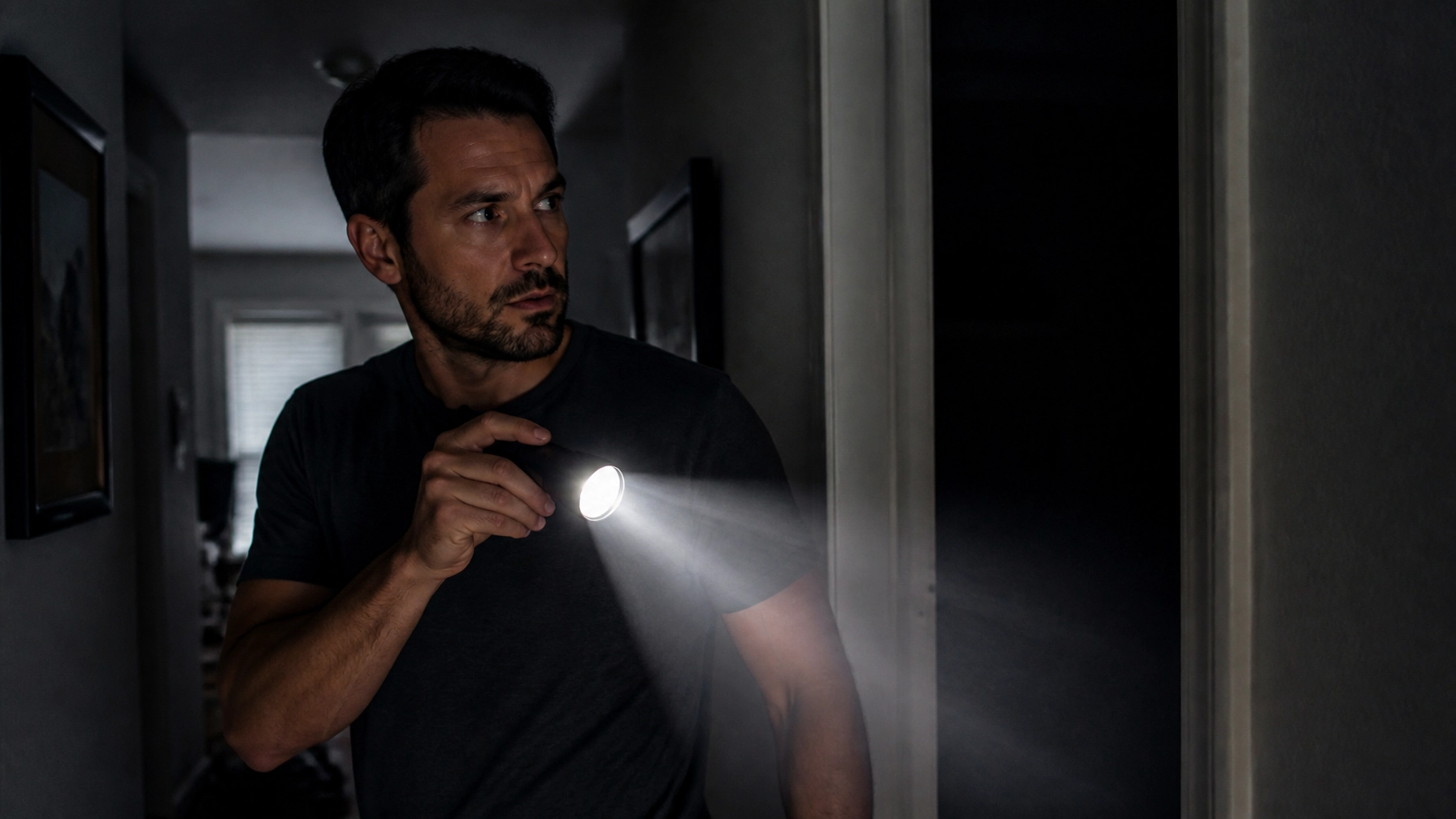
Navigate to the area where your electrical circuits originate. In most Edmonton residences, this is situated in the basement, garage, or a dedicated utility closet. Ensure the floor is dry before proceeding. Use a reliable flashlight to illuminate the area rather than relying on tactile sensation in the dark.
Step 2: Identify the Tripped Component

Examine the rows of switches. A tripped breaker rarely flips entirely to the 'OFF' position. Instead, look for a handle that rests in a middle position or shows a small red indicator window. This mechanical state signifies that the internal safety trip has been engaged due to an overcurrent or a short circuit.
Step 3: Execute the Full Reset
Follow the mandatory mechanical sequence to restore power. Do not simply attempt to push the handle back to 'ON' from the middle position; the internal latch will not engage.
- Switch it fully OFF first. Apply firm pressure until you hear a distinct click.
- Switch it back to ON. This action re-arms the internal spring mechanism.
If you find that a GFCI outlet in your kitchen or bathroom has also lost power, verify if its local reset button has popped out. You can learn more about residential electrical services and how modern safety devices protect your home by consulting professional resources.
Step 4: Evaluate the Recurrence

Monitor the circuit after the reset. If the breaker immediately snaps back to the middle or 'OFF' position, cease all attempts to restore power. This indicates a persistent fault, such as a ground fault or a short circuit, which requires professional intervention. For comprehensive electrical service upgrades, ensure you consult with experts who understand the specific load requirements of modern electronics and EV charging systems.
Repeated tripping is an indicator that your electrical infrastructure may be undersized for your current consumption. For further reading on safe practices, visit the Electrical Safety Authority guidelines. If you require a detailed inspection of your system, reach out through our contact page to schedule a professional evaluation.
{“name”:”How to Safely Reset a Tripped Breaker”,”step”:[{“name”:”Locate the Electrical Panel”,”text”:”Find the electrical distribution panel, typically located in the basement, garage, or utility room. Ensure you are standing on a dry surface.”,”@type”:”HowToStep”},{“name”:”Identify the Tripped Breaker”,”text”:”Look for a breaker handle that is in the middle position or showing a red indicator. It will not be fully in the ON or OFF position.”,”@type”:”HowToStep”},{“name”:”Switch to OFF”,”text”:”Push the tripped breaker handle firmly to the ‘OFF’ position until it clicks. This resets the internal mechanism.”,”@type”:”HowToStep”},{“name”:”Switch to ON”,”text”:”Push the handle back to the ‘ON’ position to restore power to the circuit.”,”@type”:”HowToStep”},{“name”:”Call a Professional”,”text”:”If the breaker trips again immediately, stop and call a licensed electrician as there may be a dangerous electrical fault.”,”@type”:”HowToStep”}],”@type”:”HowTo”,”@context”:”https://schema.org”,”totalTime”:”PT5M”,”description”:”A step-by-step guide for homeowners to safely identify and reset a tripped circuit breaker in their residential electrical panel.”}