

Planning a kitchen renovation? Whether you're dreaming of a complete tear-down or just updating your space, there's one thing you can't ignore: your electrical system.
Today's kitchens aren't what they used to be. We've got espresso machines, air fryers, smart fridges, and countertop convection ovens. Your grandma's kitchen electrical setup just wasn't designed to handle all that power. And if you're renovating anyway, now's the perfect time to bring your electrical system into the 21st century.
Let's walk through the essential electrical upgrades you should consider for your Edmonton kitchen renovation.
Why Your Kitchen Electrical System Matters More Than You Think
Here's the deal: your kitchen is the hardest-working room in your home, electrically speaking. It's where you've got the most appliances, the most outlets, and honestly, the most potential for electrical headaches if things aren't done right.
Modern kitchens pull way more power than older homes were designed for. If your house was built before 1990, there's a good chance your electrical panel wasn't expecting you to run a microwave, dishwasher, and instant pot all at the same time. Add in a few phone chargers and that fancy coffee maker, and you're looking at potential circuit overload.
That's not just inconvenient, it's a safety issue.
Starting with the Foundation: Your Electrical Panel
Before you pick out granite countertops or cabinet hardware, you need to think about your electrical panel. This is the heart of your home's electrical system, and if it's outdated or undersized, you're going to have problems.
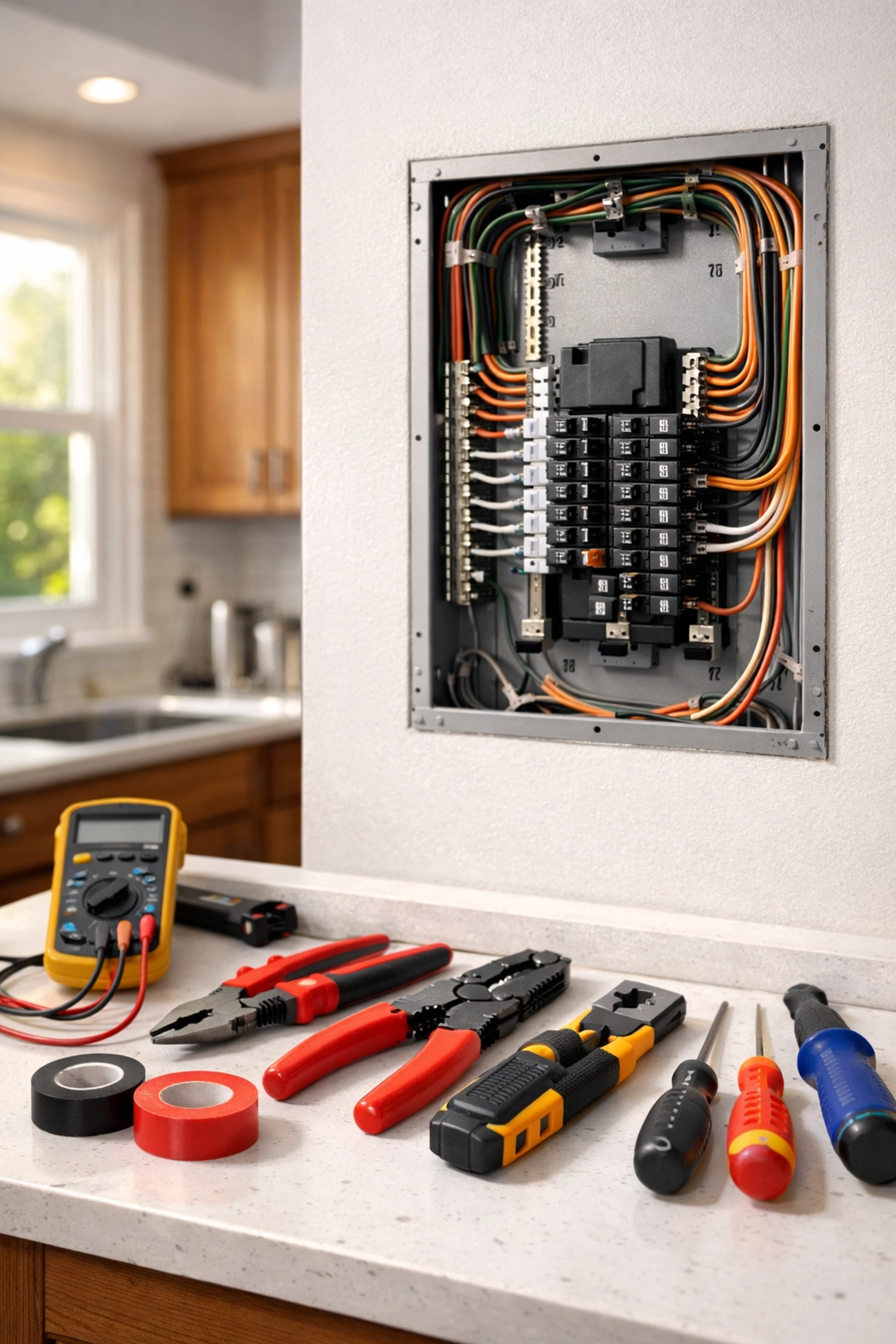
Most modern kitchens need dedicated circuits for major appliances. That means your fridge gets its own circuit, your microwave gets its own circuit, and your dishwasher gets its own circuit. If you're planning a kitchen island with outlets (and you should), that needs proper circuitry too.
An experienced electrician in Edmonton can assess whether your current panel can handle these demands or if you need an upgrade. Panel upgrades typically run between $1,500 and $3,000 in Edmonton, but it's money well spent. Think of it as an investment in your home's electrical infrastructure, future-proofing your home for whatever technology comes next.
GFCI Outlets: Non-Negotiable Safety
Let's talk about GFCI outlets. These are the outlets with the little "test" and "reset" buttons, and they're absolutely essential in kitchens.
GFCI (Ground Fault Circuit Interrupter) outlets are designed to protect you from electrical shock in areas where water is present. In a kitchen, that's pretty much everywhere, near your sink, around the dishwasher, even by your coffee maker.
Here's how they work: if the GFCI detects any imbalance in electrical current (like what happens when electricity meets water), it shuts off power in a fraction of a second. It's basically a lightning-fast safety switch that can literally save your life.
According to the Electrical Safety Foundation International, GFCIs reduce the risk of electrical shock by detecting ground faults and cutting power before serious injury can occur. The Canadian Electrical Code requires GFCI protection for all kitchen counter outlets, and any electrical contractor in Edmonton worth their salt knows this inside and out.
During your renovation, make sure every outlet within six feet of your sink has GFCI protection. It's code, it's smart, and it's worth doing right.
Lighting: More Than Just One Overhead Fixture
Remember when kitchens just had one ceiling light in the middle of the room? Those days are long gone, and for good reason.
Modern kitchen lighting is all about layers: ambient lighting (your overall room light), task lighting (for prep areas), and accent lighting (to highlight your design features and create atmosphere).
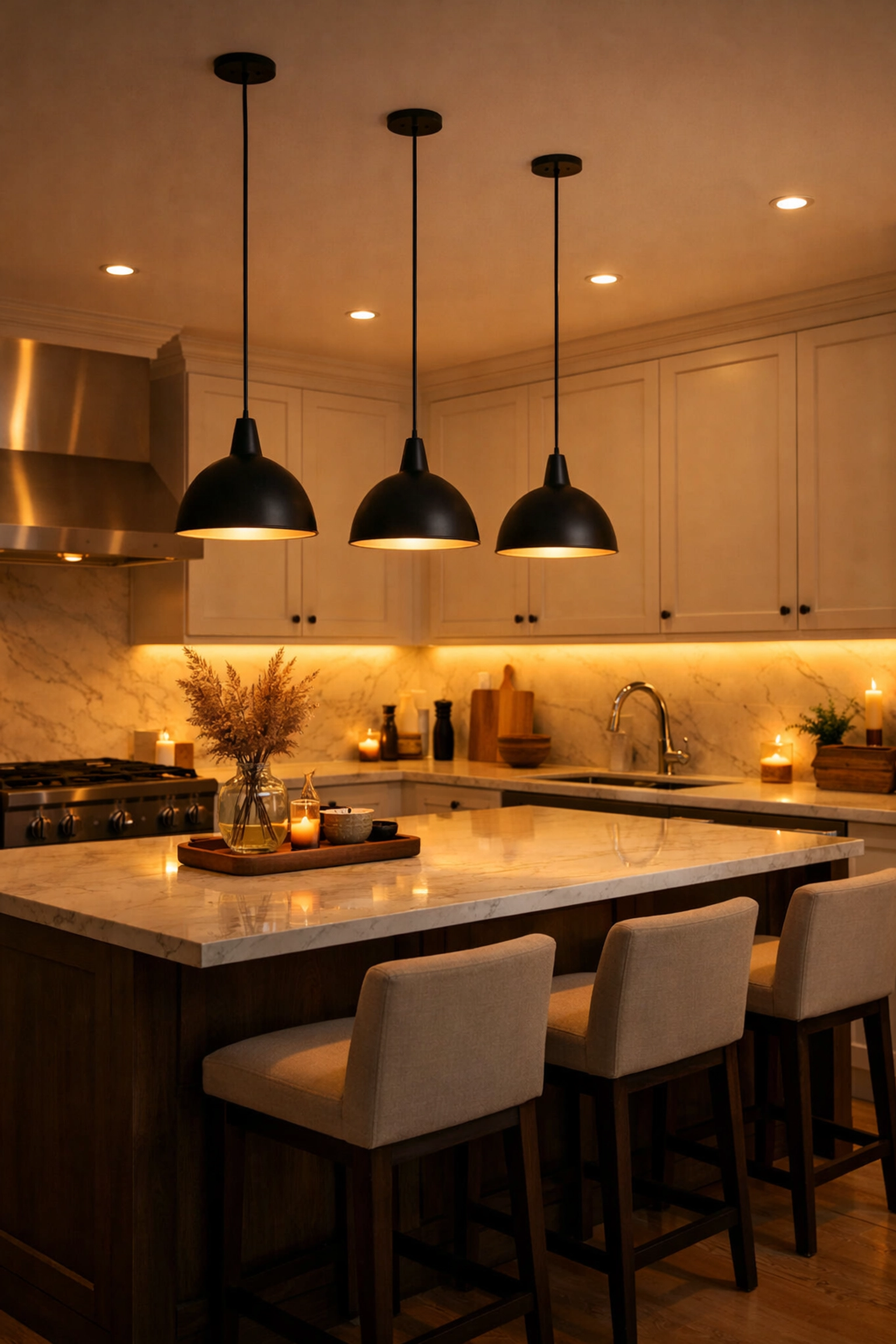
Under-Cabinet Lighting
This is probably the best bang-for-your-buck lighting upgrade you can do. LED strips under your cabinets illuminate your countertops, eliminating shadows while you're chopping vegetables or reading recipes. No more working in your own shadow, and modern LEDs use up to 75% less power than old-school incandescent bulbs.
Recessed Lighting
Pot lights give you clean, even coverage without taking up visual space. They're perfect for the overall ambient lighting in your kitchen and give you that modern, streamlined look. Plan for proper spacing, usually 4 to 6 feet apart, and make sure they're on dimmers so you can adjust the mood.
Pendant Lights
Got a kitchen island? Pendant lights over the island are both functional and stylish. They provide task lighting right where you need it while adding personality to your space. Just make sure the electrical boxes are positioned correctly, you don't want to realize after the fact that your lights are hanging in the wrong spot.
Toe-Kick and Display Lighting
Want to take it up a notch? Toe-kick lighting (LED strips at the base of your cabinets) and in-cabinet display lighting add warmth and depth. These are the finishing touches that make your kitchen feel custom and high-end.
Smart Kitchen Technology
We're living in the future, folks. Your kitchen should reflect that.
Smart switches and dimmers let you control your kitchen lighting from your phone or with voice commands. "Hey Google, dim the kitchen lights to 50%" isn't just convenient, it's a game-changer when your hands are covered in flour.
Beyond lighting, think about what other smart devices you might want:
- Smart outlets for plugging in small appliances
- USB charging ports built right into your outlets
- Motion-sensor lighting for late-night snack runs
- Smart exhaust fans that automatically adjust based on cooking activity
All of this requires proper planning and wiring during your renovation. It's way easier (and cheaper) to add these features while the walls are open than to retrofit them later.
Planning Your Outlet Placement
Here's where a lot of DIY renovations go wrong: outlet placement. You don't want to finish your beautiful new kitchen only to realize you don't have enough outlets, or they're in all the wrong places.
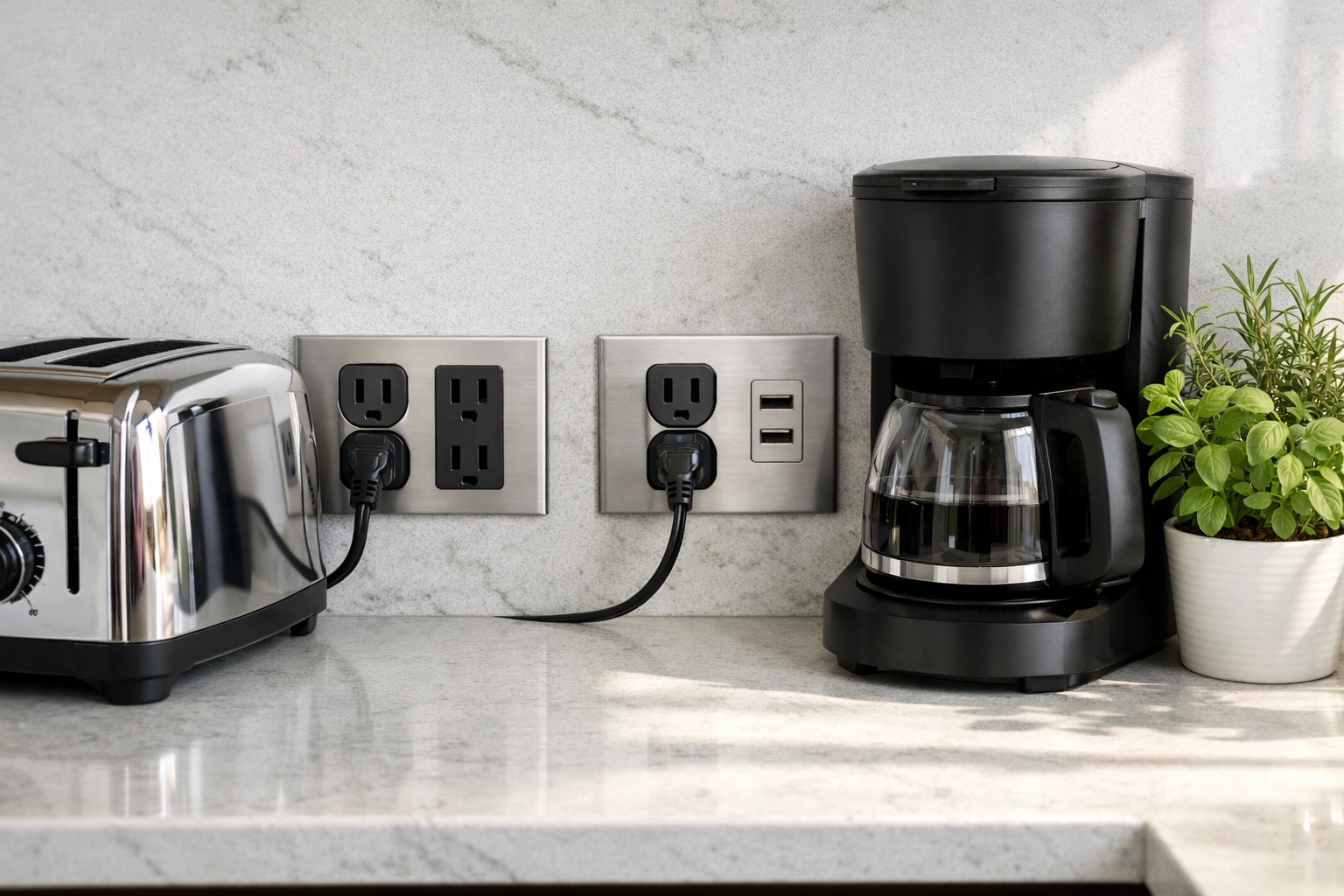
Code requires outlets every four feet along countertops, but let's be honest, that's the bare minimum. Think about how you actually use your kitchen:
- Where do you keep your coffee maker, toaster, and blender?
- Do you charge your phone or tablet in the kitchen?
- Will you have a kitchen island with bar seating? (You'll want outlets there too)
- Are you planning a coffee station or beverage center?
At Robart Electrical Services, we help Edmonton homeowners map out their electrical layout based on how they actually live. It's not just about meeting code, it's about creating a functional space that works for your lifestyle.
Dedicated Circuits for Major Appliances
Every major kitchen appliance should have its own dedicated circuit. Here's the basic list:
- Refrigerator
- Dishwasher
- Microwave
- Range or cooktop
- Wall oven (if separate from cooktop)
- Garbage disposal
If you're adding a wine fridge, beverage center, or that second dishwasher (yes, it's becoming a thing), each needs its own circuit too.
Why does this matter? When multiple high-power appliances share a circuit, you risk tripping breakers constantly. Nothing kills the vibe of hosting Thanksgiving dinner like having to run to the basement to flip a breaker because you tried to use the microwave while the oven was on.
Protecting Your Investment
Once you've upgraded your kitchen electrical system, you want to protect it. That's where whole-home surge protection comes in.
Edmonton's weather can be tough on electrical systems. Lightning strikes, power surges from the grid, and even your own high-powered appliances cycling on and off can send voltage spikes through your system. A whole-home surge protector acts as a shield, protecting your investment in all those new appliances and smart devices.
Working with a Licensed Electrical Contractor
Here's the thing: kitchen electrical work isn't DIY territory. You need permits, you need inspections, and most importantly, you need expertise.
A qualified electrical contractor in Edmonton will:
- Help you plan your layout for maximum functionality
- Ensure everything meets current electrical code
- Handle permit applications and inspections
- Complete the work safely and efficiently
- Provide warranty protection on their workmanship
Most kitchen electrical projects take 1 to 3 days to complete, depending on the scope. That includes running new circuits, installing outlets and switches, upgrading lighting, and making sure everything is properly grounded and protected.
The Bottom Line
Your kitchen renovation is a big investment. Don't let outdated electrical work hold back your beautiful new space.
By planning your electrical upgrades thoughtfully: from panel capacity to outlet placement to smart technology integration: you're creating a kitchen that's not just beautiful, but functional and safe for years to come.
At Robart Electrical Services, we've helped countless Edmonton homeowners navigate kitchen renovation electrical projects. We know the local codes, we understand Alberta's unique requirements, and we're here to make sure your electrical system supports the kitchen of your dreams.
Ready to start planning your kitchen renovation electrical work? Let's talk about making your vision a reality: safely, efficiently, and up to code.