
Hey everyone, it’s Howard here from Robart Electrical Services.
Hard to believe we’re already in March of 2026, isn't it? It feels like just yesterday we were talking about "smart homes" as something from a sci-fi movie. Now, between the electric truck sitting in your driveway, the air-source heat pump keeping your living room cozy, and the induction stove that boils water in sixty seconds, your house is doing a lot more heavy lifting than it used to.
But here is the honest truth: most of the homes we visit in Edmonton aren't actually built for 2026. They’re running on electrical brains designed for 1976.
If you’ve been noticing your lights flicker when the microwave starts, or if you’re tired of running to the basement to flip a breaker every time someone uses a hair dryer while the dishwasher is on, this post is for you. We’re going to dive deep into why your electrical panel is the most important "appliance" in your home and how you can make sure it’s ready for the future.
Why 2026 is the Tipping Point for Home Energy
For decades, a 100-amp electrical service was the gold standard. It was plenty for a few lights, a fridge, a TV, and maybe an electric dryer. But the way we live in Edmonton has shifted dramatically in just the last few years.
We are seeing a massive move toward "electrification." What does that mean? It means we’re swapping out gas-burning appliances for electric ones. Whether it's because of new building codes, carbon tax incentives, or just wanting better performance, the load on your electrical system has skyrocketed.
Think about it:
- EV Chargers: A Level 2 charger can pull 32 to 48 amps all by itself.
- Heat Pumps: These are becoming the norm for high-efficiency heating and cooling in Alberta, but they require a significant, steady draw of power.
- Smart Tech: Everything is "smart" now, from your blinds to your fridge, and while individual gadgets don't use much, they add up to a constant "phantom load" on your system.
If you’re still running on a 100-amp panel, you’re basically trying to run a modern high-def theater system through a pair of old 1980s headphones. It might work for a bit, but eventually, something is going to blow. This is why many homeowners are looking into a 200 amp service Edmonton upgrade to keep up with the demand.
The Problem with the "Standard" 100-Amp Panel
Most older homes in Edmonton: especially in established neighborhoods like Glenora, Strathcona, or Highlands: were built with 100-amp service. At the time, that was generous.
Today? A 100-amp panel is likely "full" before you even consider adding an EV charger.
When we say a panel is "full," we don't just mean there are no more physical slots for breakers. We mean the total potential draw of all your appliances exceeds what the main breaker can safely handle. If you try to pull 110 amps through a 100-amp main breaker, it’s going to trip. That’s its job: to stop your wires from melting. But if it happens constantly, it’s a sign that your home is starving for power.

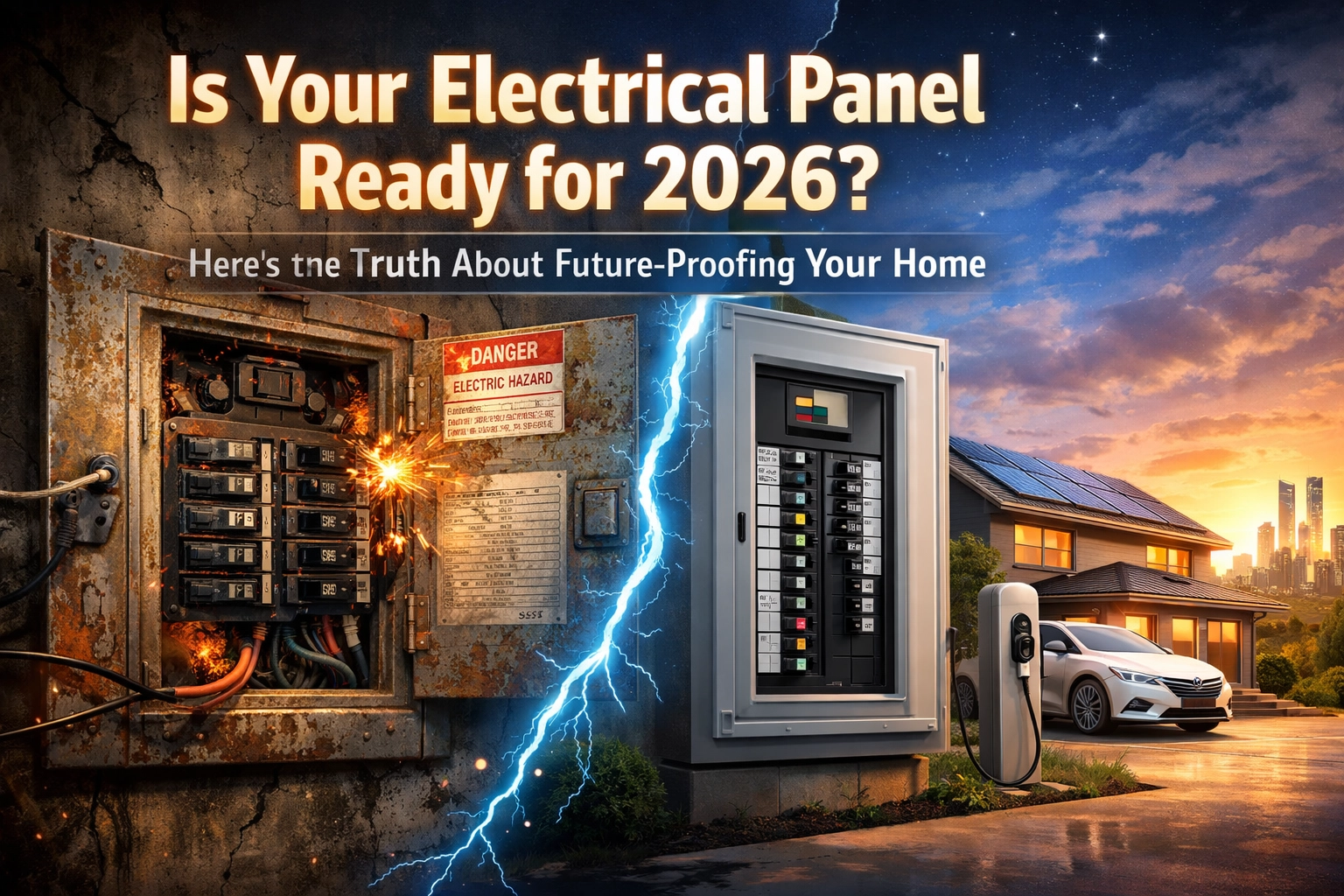
Caption: An older, crowded electrical panel: similar to Federal Pioneer or Stab-lok models: that is reaching its capacity limits.
The Safety Red Flags: It’s Not Just About Capacity
Capacity is one thing, but safety is another. If you have an older home, you might have a panel brand that is actually a known fire hazard.
In Edmonton, we see a lot of Federal Pioneer (Stab-lok) panels. Back in the day, these were everywhere. However, over time, it was discovered that these breakers have a high failure rate. Specifically, they sometimes refuse to trip even when there’s a short circuit or an overload. Instead of cutting the power, the breaker stays "on," the wires get red hot, and that’s how house fires start.
If you open your panel door and see the name "Federal Pioneer" or "Stab-lok," or if the breakers have orange handles, you should call an electrician sooner rather than later. It’s not just about future-proofing; it’s about sleeping soundly at night. You can read more about why your old home needs a service upgrade to understand the specific risks involved with these older systems.
What Does a 200-Amp Upgrade Actually Look Like?
So, you’ve decided you want to be ready for that new Tesla or the heat pump installation next summer. What happens during an Edmonton electrical panel upgrade?
It’s not as simple as just swapping the box on the wall. Here’s the typical process we follow at Robart Electrical Services:
- The Load Calculation: We don’t guess. We look at everything in your home: your stove, dryer, AC, shop tools: and calculate exactly how much power you need.
- Permits and Coordination: We handle the City of Edmonton residential electrical permits and coordinate with EPCOR. Since we’re increasing the "service" to your house, EPCOR often has to come out and ensure the wires coming from the utility pole (or underground) are thick enough to handle the extra juice.
- The Big Day: On the day of the upgrade, we disconnect the power. We remove the old panel and the old "mast" (the pipe on the side of your house). We install a brand new 200-amp rated mast, meter base, and a high-quality panel with plenty of room for future growth.
- Labeling and Testing: This is where we get picky. Every single circuit gets tested and clearly labeled. No more guessing which breaker controls the "upstairs hallway plug."
- Inspection: An inspector from the City of Edmonton comes by to sign off on the work, ensuring everything is up to the 2026 National Electrical Code.

Caption: A modern, clean, and professionally labeled 200-amp electrical panel installation.
Future-Proofing: Beyond Just Amps
If we’re talking about 2026 and beyond, a 200-amp panel is the foundation, but there are a few other things you should consider to truly "future-proof" your home.
Whole-Home Surge Protection
With all the sensitive electronics we have now: from smart fridges to $80,000 electric vehicles: a single power surge from a lightning strike or an EPCOR transformer glitch can fry thousands of dollars of equipment. When we do a panel upgrade, we always recommend adding a whole-home surge protector. It’s a small device that sits inside your panel and acts as a security guard for your entire house. You can learn more about protecting your investment with surge protection here.
Smart Panels and Energy Monitoring
The 2026 electrical code is starting to embrace "Smart Panels." These are panels that allow you to see exactly how much power your dryer is using vs. your TV via an app on your phone. Some smart panels can even automatically turn off non-essential circuits (like a hot tub) if they sense you’re about to exceed your total power limit, which can sometimes save you from having to do even larger service upgrades down the road.
The Dangers of the DIY Panel Swap
I’ll be blunt here: the electrical panel is not a DIY project.
I know, I know: YouTube makes everything look easy. But the panel is where the "raw" power from the utility enters your home. There is no fuse or breaker between the street and your main lugs. If you slip with a screwdriver in there, it’s not just a spark; it’s an arc flash that can cause severe burns or worse.
Furthermore, if you do your own panel work without a permit and a licensed electrician, and heaven forbid a fire ever happens, your insurance company will likely walk away. It’s just not worth the risk. At Robart, we’ve spent years mastering everything you need for Edmonton residential electrical so that you don't have to worry about the "what ifs."

Caption: A professional electrician at Robart Electrical Services carefully installing a new circuit breaker.
Is It Time for You to Upgrade?
If you’re nodding your head to any of these points, it’s probably time to have a professional take a look:
- Your home was built before 1990 and still has the original panel.
- You’re planning on buying an EV or installing a hot tub.
- You’re renovating your kitchen with high-end appliances.
- You see flickering lights or hear "crackling" sounds from your panel.
- You’ve run out of physical space to add new breakers.
Future-proofing home electrical isn't just about being able to run more gadgets; it’s about safety, efficiency, and increasing the value of your home. In 2026, a 200-amp service is a major selling point for any Edmonton property.
Let’s Get Your Home Ready
At Robart Electrical Services, we pride ourselves on making these upgrades simple and stress-free. We’re a local Edmonton team, and we know exactly what the City inspectors and EPCOR are looking for. We don't use high-pressure sales tactics; we just give you the facts and help you make the best decision for your family and your budget.
If you’re curious about your panel’s capacity or want a quote for a 200-amp upgrade, give us a shout. Let’s make sure your home is ready for whatever the rest of 2026 (and 2036!) has in store.
Stay safe out there,
Howard
CEO, Robart Electrical Services