
Your electrical panel is the heart of your home's power system. But if you're living with an older panel, you might be dealing with more than just inconvenience: you could be facing safety risks and code violations that put your family and property at risk.
In Edmonton, electrical panel upgrades aren't just about convenience. They're about safety, compliance with current codes, and ensuring your home can handle modern electrical demands. Here's everything you need to know before making this important investment.
Clear Signs Your Panel Needs an Upgrade
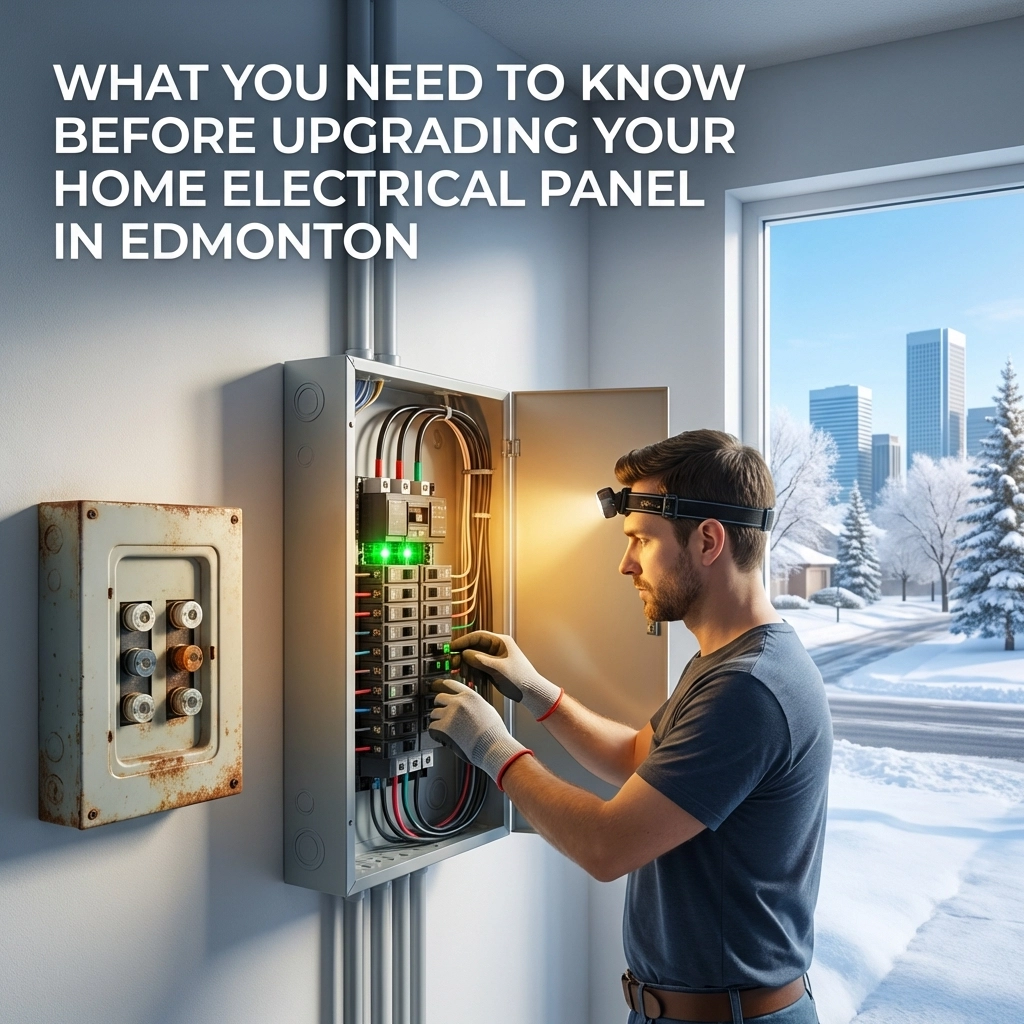
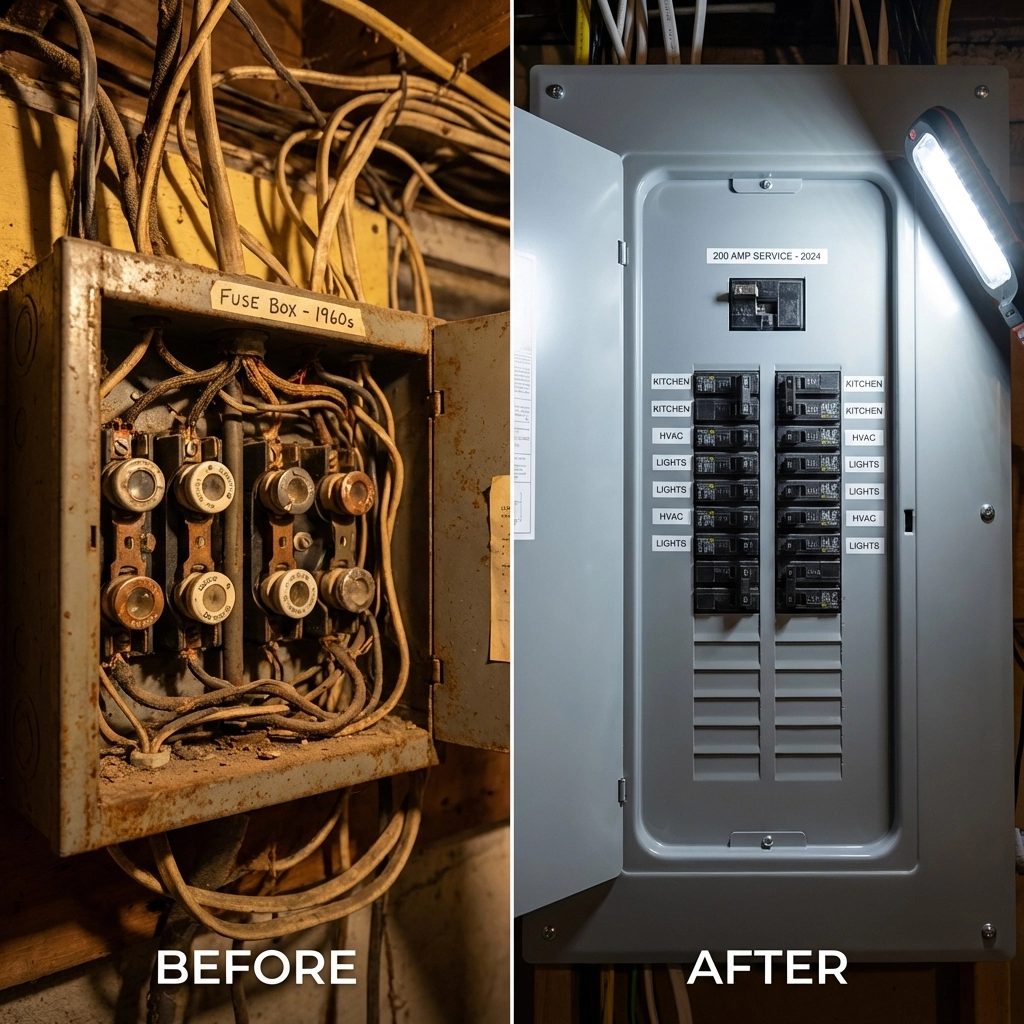
Age is the biggest factor. If your panel is over 30 years old or still uses fuses instead of circuit breakers, it's time for an upgrade. These older systems simply weren't designed for today's electrical needs.
But age isn't the only indicator. Here are the warning signs every Edmonton homeowner should watch for:
Frequent breaker trips mean your panel is working overtime trying to manage electrical loads it wasn't designed to handle. This isn't just annoying: it's dangerous.
A full breaker panel with no space for new circuits is another clear sign. If you're planning any home improvements or need to add new appliances, you'll need the capacity.
Double-tapped breakers are a serious code violation. This happens when two wires are connected to a single breaker that's only designed for one wire. It creates overheating risks and fire hazards.
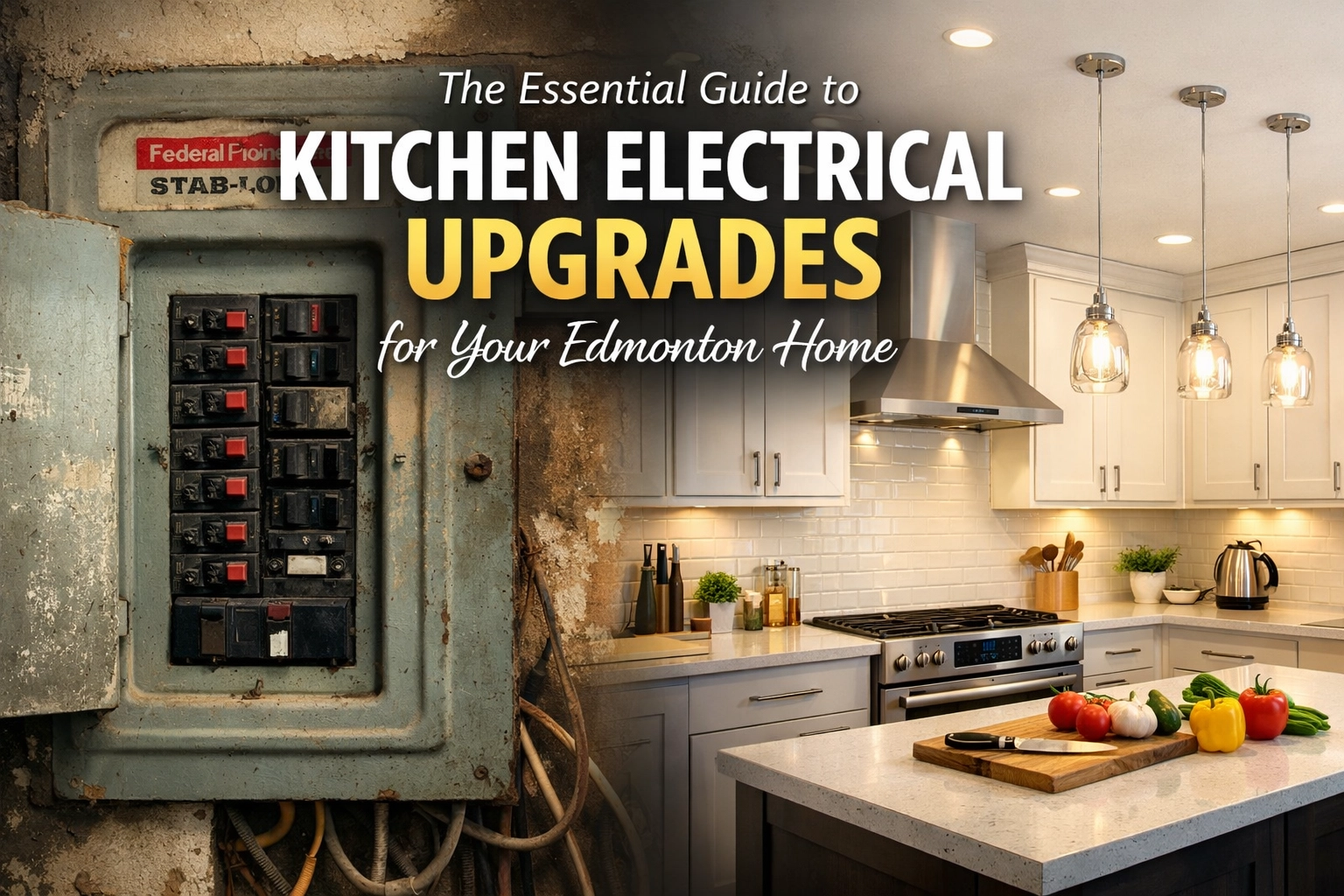
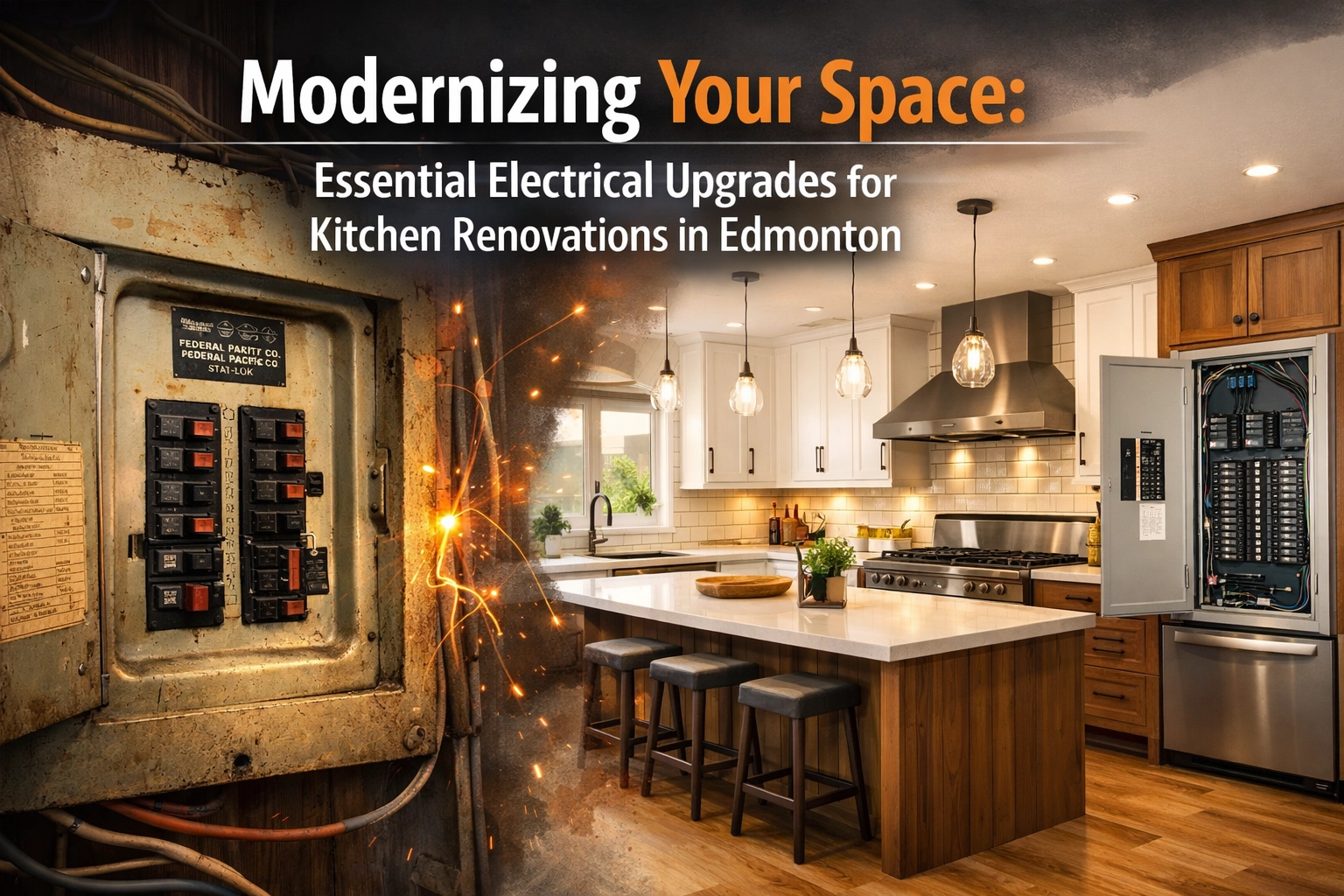
Federal Pacific Electric panels installed between 1950-1990 have extremely high failure rates and should be replaced immediately, regardless of their current condition.

Edmonton's Electrical Code Requirements
Every electrical panel upgrade in Edmonton requires a permit from the City of Edmonton. This isn't optional, and it's not something you can skip to save money. The permit process exists to ensure your upgrade meets current safety standards.
The Canadian Electrical Code sets the minimum service at 100 amps, but most Edmonton homes today benefit from 200-amp service. This provides enough capacity for modern appliances, HVAC systems, and future additions like EV charging stations.
Ground fault circuit interrupters (GFCIs) are mandatory for all outlets within 1.5 meters of water sources. Your new panel must also be mounted 1.7 meters from the floor to the highest breaker.
These requirements aren't just bureaucratic red tape: they're proven safety measures that protect your family and property. According to the National Fire Protection Association, electrical failures are a leading cause of home fires, and proper panel installation significantly reduces this risk.
The Upgrade Process: What to Expect
Timeline matters when planning your upgrade. The entire process typically takes 1-2 weeks from start to finish, though the actual installation happens in a single day.
Here's how the process works:
Your licensed electrician starts with a load calculation assessment to determine the right amperage for your home. This involves analyzing your current and future electrical needs, including any planned additions or major appliances.
Permit acquisition comes next, and your electrician handles this through the City of Edmonton. Never work with someone who suggests skipping the permit: this is a red flag that they're not following proper procedures.
Utility coordination with EPCOR is essential because they need to disconnect and reconnect your power meter. Your electrician coordinates this to minimize downtime.
During the actual installation, your power will be off for several hours. Plan accordingly: this means no lights, no refrigeration, and no electronic devices during the work.
Final inspection by a City of Edmonton inspector happens within a day or two after installation. This ensures everything meets code and is safe for long-term use.
Safety Considerations You Can't Ignore
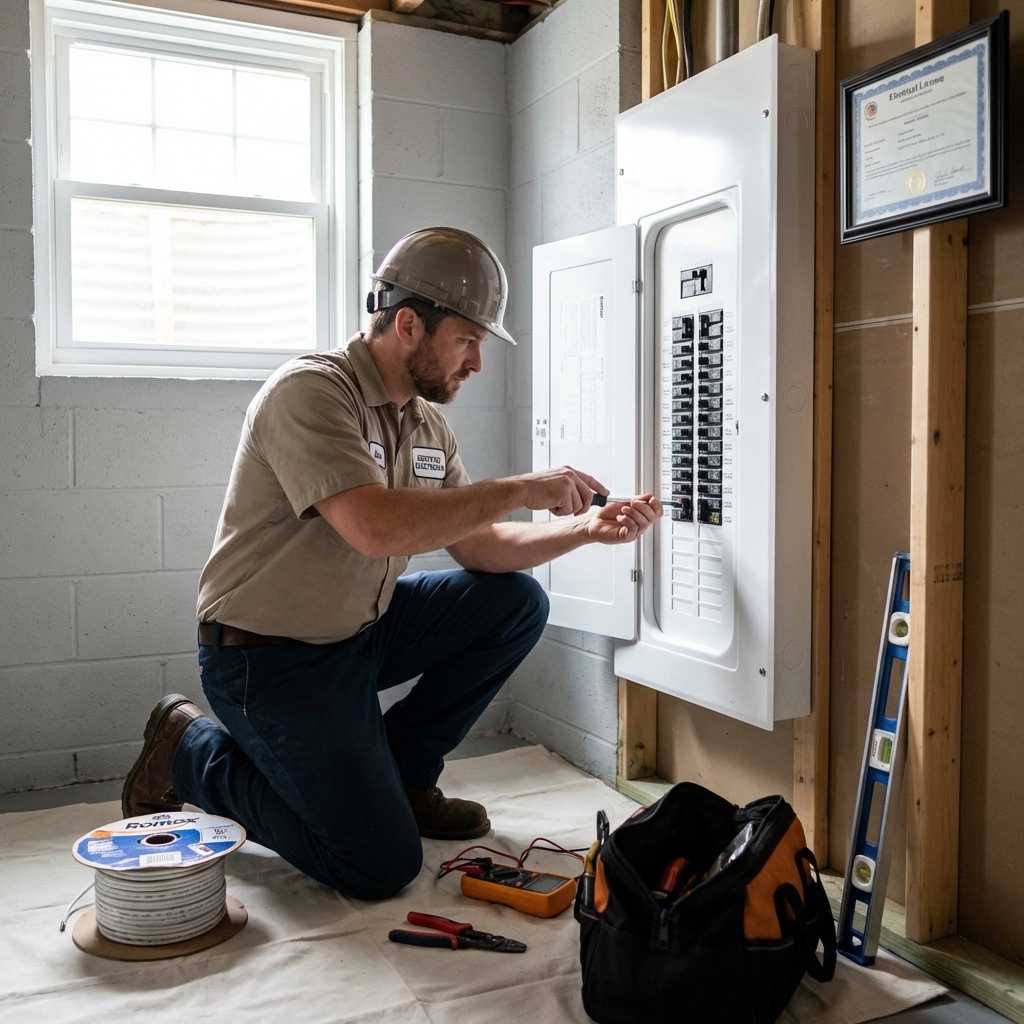
Electrical panel work is not a DIY project. The voltages involved can be fatal, and mistakes can cause fires, electrocution, or extensive property damage. In Edmonton, this work must be performed by a licensed electrician: it's the law for good reason.
Old wiring often accompanies old panels. If your home has aluminum wiring or cloth-insulated wires, these may need replacement during the upgrade. While this adds to the cost, it's essential for safety and code compliance.
Insurance implications are real. Without proper permits and inspections, your homeowner's insurance may not cover electrical-related damage. Some insurers require electrical upgrades for older homes as a condition of coverage.
Cost Factors and Investment Value
Several factors affect the cost of your panel upgrade:
Amperage level is the primary cost driver. Upgrading from 60-amp to 100-amp service costs less than jumping to 200-amp service, but the 200-amp option provides much better future flexibility.
Existing wiring condition significantly impacts costs. If your current wiring needs replacement, expect additional expenses. However, this is often necessary for safety and code compliance.
Distance from the street transformer affects installation complexity. Longer runs require more materials and labor.
Panel location within your home can add costs if extensive rewiring is needed to reach the new location.
While the upfront investment is significant, a properly upgraded electrical panel increases your home's value and safety. It also provides the capacity needed for modern conveniences and future improvements.
Choosing the Right Electrical Contractor
Licensing verification is your first step. Every electrical contractor in Edmonton must be licensed and insured. Don't work with anyone who can't provide proof of both.
Experience with Edmonton regulations matters because local codes and permit processes have specific requirements. A contractor familiar with City of Edmonton procedures will manage your project more efficiently.
References from recent customers give you insight into work quality and reliability. Ask specifically about projects similar to yours and whether the work passed inspection on the first try.
At Robart Electrical Services, we handle every aspect of your panel upgrade, from initial assessment through final inspection. Our licensed electricians understand Edmonton's specific requirements and work with local inspectors regularly.
Planning for Future Electrical Needs
Think beyond your current needs when sizing your new panel. If you're considering an electric vehicle, hot tub, workshop, or home addition in the next few years, plan for these now. It's much more cost-effective to install adequate capacity initially than to upgrade again later.
Smart home integration is becoming standard, and these systems require dedicated circuits. A properly sized panel provides the flexibility to add smart thermostats, security systems, and home automation without electrical limitations.
Energy efficiency upgrades like heat pumps or solar panels have specific electrical requirements. Discuss these possibilities with your electrician during the planning phase.
The Bottom Line on Panel Upgrades
An electrical panel upgrade is one of the most important safety investments you can make in your Edmonton home. While the upfront cost is significant, the benefits: improved safety, code compliance, increased capacity, and enhanced home value: make it worthwhile.
Don't delay if you're seeing warning signs. Frequent breaker trips, burnt smells, or visible damage to your panel require immediate professional attention. These issues don't improve on their own and can create serious safety hazards.
Working with experienced professionals ensures your upgrade meets all Edmonton requirements and provides reliable service for decades. The peace of mind that comes with a properly installed, up-to-code electrical system is invaluable.
Remember, electrical work isn't the place to cut corners. Choose licensed professionals, obtain proper permits, and ensure final inspections are completed. Your family's safety depends on getting this right the first time.
For professional electrical panel upgrades in Edmonton, contact our team at Robart Electrical Services. We'll assess your needs, handle all permits and inspections, and ensure your upgrade meets current codes and safety standards.