

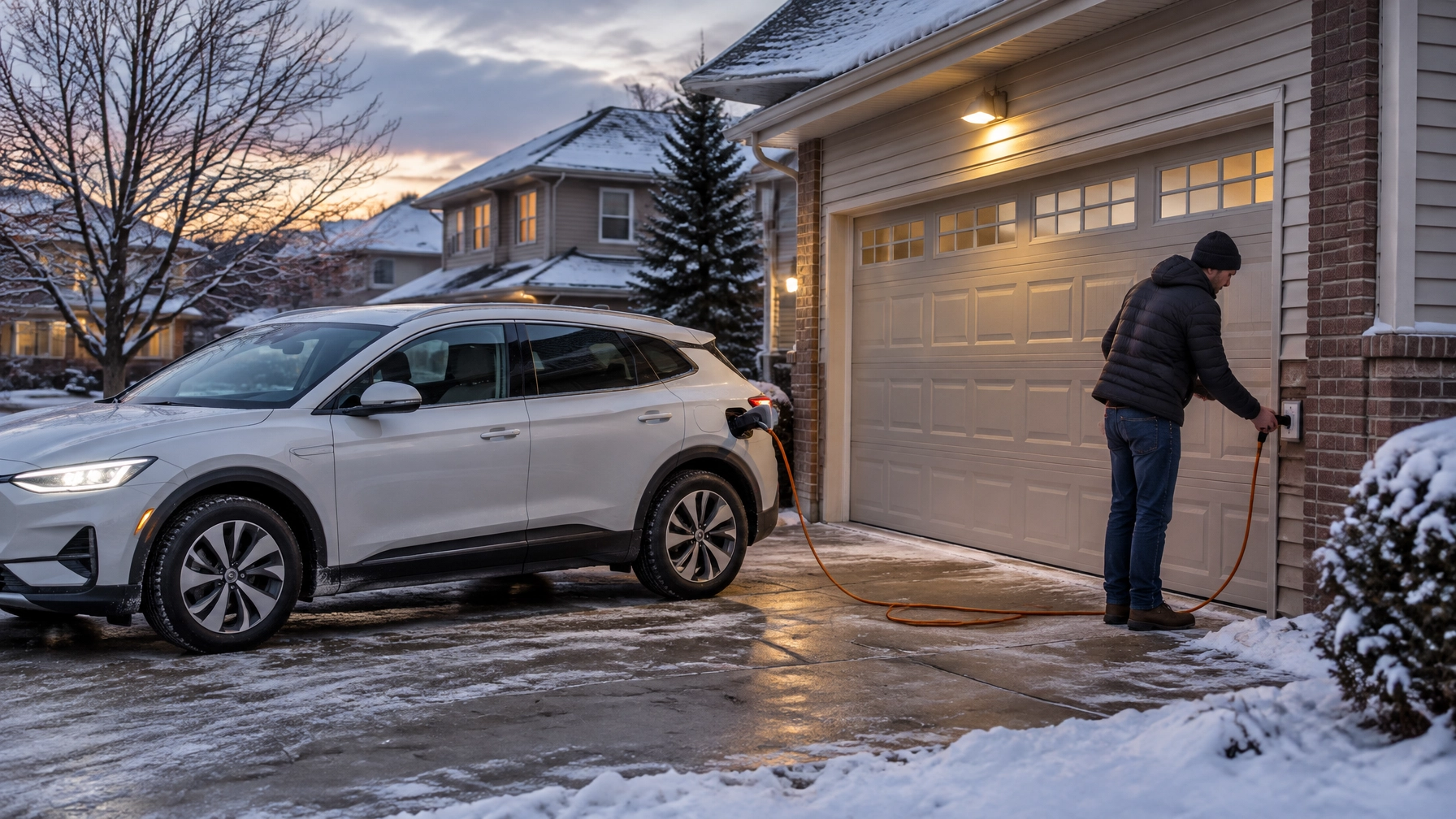
By the time Neighbor 1’s new electric vehicle was parked in the driveway, the whole block had heard about it. The part Neighbor 1 had not mentioned was the long extension cord running from the garage to the car.
“It’s just charging,” Neighbor 1 said, plugging in. “No upgrade needed.”
The cord crossed the cold driveway, and the car began charging. But that garage circuit also served other loads. As the charging continued, the circuit’s protective devices interrupted power. The garage GFCI tripped, and Neighbor 1 announced that “every GFCI in the house” had gone out.

It had not. The GFCI at the garage receptacle had tripped; the other GFCIs were unaffected. GFCI protection helps reduce shock risk by detecting current leakage. It is not the same as overcurrent protection, which responds to an overloaded circuit. If a GFCI trips while charging, stop and investigate. Don’t keep resetting it and restarting the charge. A trip can point to a fault, unsuitable equipment, or a circuit that is not appropriate for the load.
Neighbor 2, the Traditionalist, stepped onto the porch. “I’ve got the old car, old wiring, and a bill that keeps climbing,” they grumbled. Neighbor 3, the Techie, arrived with a tablet showing solar, batteries, and EV data. Vegan and proud of it, Neighbor 3 looked at the cord and said: “All for nothing, eh? … I'm vegan, but if I were you, I wouldn't go cheap, protect your meat.”
Neighbor 1 rolled up the cord. That was a start, but not a charging plan.
A standard 120-volt receptacle may support Level 1 charging when the vehicle’s portable charging equipment and the circuit are suitable. But an extension cord is not a substitute for permanent wiring, and it can introduce additional risks. Check the vehicle and equipment instructions; don’t assume an ordinary receptacle can support the charging load simply because the plug fits.

For Level 2 charging, an electrician typically installs a properly sized branch circuit and compatible charging equipment, either hardwired or connected to an approved receptacle. The design must account for the EVSE’s electrical requirements, the home’s existing loads, and required protection. EV charging equipment and receptacles require GFCI protection as applicable under the current electrical code, equipment listing, and installation instructions. AFCI protection is separate: it detects certain arcing conditions that can create a fire risk.
Neighbor 1 asked the question everyone asks: “So, do I need a service upgrade?”
“Not every home does,” Neighbor 3 replied, “but nobody can say yours doesn’t without checking.” A qualified electrician must complete a load calculation before determining that no service upgrade is required. Depending on the results, the home may need a service upgrade or an approved energy-management solution.
In Edmonton, the City’s EV charging-station permit process calls for a load calculation to show that the existing service can support the charger, or for an energy-management plan. Review Robart’s information on residential electrical services, service upgrades, and planning GFCI and AFCI protection.

The next week, Neighbor 1’s garage had a properly planned charging setup. Neighbor 2 still complained about the power bill, and Neighbor 3 still had a spreadsheet for every electron. But the extension cord was back on its hook, and the block had a new understanding: fitting a plug is not the same as having a suitable circuit.